
While she primed up spending on infrastructure to create jobs and boost economic activity, Sitharaman did not tinker with income tax slabs or tax rates. Her Budget for the fiscal year beginning April 2022 proposed a massive 35 per cent jump in capital expenditure to Rs 7.5 lakh crore, coupled with rationalisation of customs duty, an extension of time for setting up new manufacturing companies and plans for starting a digital currency and tax crypto assets.

After 2 years of lull, sale of winter products like heaters and woollens grow in double-digit

Maruti Suzuki, Hyundai, Mahindra and Toyota reported low single-digit sales growth for the month owing to weak market sentiment

Smart positioning, continued communication and a global design language have played a big role, say experts

Dealers say that the full-year outlook remains negative with a projected contraction in retail sales of 15-35 per cent across segments, save tractors, which look set to clock a positive annual growth.


RRVL will make an open offer to acquire up to an additional 2.17 crore equity shares of Just Dial, representing 26 per cent stake, in accordance with Sebi Takeover Regulations, a regulatory filing said.

ITC's noodle brand has been caught in the Maggi crossfire.

Car sales likely to touch record 3-mn mark by the end of March.
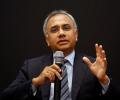
Infosys CEO Salil Parekh has got a massive 88 per cent jump in annual remuneration to Rs 79.75 crore, making him one of the highest-paid executives in the country. The software services firm has sought shareholders' approval for the reappointment of Parekh as chief executive officer and managing director for a second five-year term beginning July 1. According to the company's annual report released on Thursday, Parekh, 58, took home a salary of Rs 71.02 crore in the fiscal year ended March 31, 2022.

India's real estate industry staged a rebound from 2020's downturn, with housing sales seen rising by over 50 per cent. The performance, though short of pre-COVID levels, has property developers hoping for stronger gains in the New Year and the beginning of a long upcycle. A strong foundation has been laid this year for revival in the Indian real estate sector, which is projected to reach $1 trillion mark by 2030 from $200 billion in the pre-pandemic year.

IndusInd Bank was the top gainer in the Sensex pack, soaring around 7 per cent, followed by Axis Bank, Bajaj Finance, ONGC, Titan, Infosys and Tech Mahindra.

While the investment amount could not be immediately ascertained, a report pegged it at about $2 billion.

RIL has faced protests from local authorities, activists and residents across India campaigning against masts and roadworks.

The government on Wednesday approved a Rs 7,350-crore scheme to boost production of laptops, tablets, all-in-one PCs and servers in the country, as it sought to woo global and domestic players to take advantage of India's manufacturing prowess. Production worth Rs 3.26 lakh crore and exports of Rs 2.45 lakh crore are estimated over the next four years under the new scheme, which is expected to create 1.80 lakh jobs. Briefing reporters after a meeting of the Cabinet, Communications and IT Minister Ravi Shankar Prasad said the Production Linked Incentive (PLI) scheme has been approved for IT hardware products that would cover laptops, tablets, all-in-one PCs and servers.

The liquidity-fuelled rally will continue for some time, however, fundamentals are getting stretched.

Billionaire Mukesh Ambani-run Reliance Industries Ltd's retail arm on Thursday raised Rs 9,555 crore from Public Investment Fund (PIF) of Saudi Arabia, taking total fundraise in the last two months to Rs 47,265 crore. PIF will take a 2.04 per cent stake in Reliance Retail Ventures Ltd (RRVL), the Indian firm said in a statement. The investment values RRVL, the retail arm of Reliance Industries Ltd, at a pre-money equity value of Rs 4.587 lakh crore.

With multiple options in the compact sport utility vehicle (SUV) and compact sedan space, the mid-size sedan seems to be losing its charm among customers.

The first half of the year (H1-2020) was marked by sluggish growth with demand down 26 per cent YoY, while the second half saw recovery. H2-2020 recovered with 19 per cent YoY growth, reports Shivani Shinde.

The US-based company, in collaboration with partners like Wistron and Foxconn, had recently started assembling iPhone 11 in India.

SBI was the top gainer in the Sensex pack, surging around 8 per cent. Tata Steel, Bajaj Finance, HDFC Bank, NTPC, Axis Bank and ICICI Bank also ended with firm gains. On the other hand, TCS, HUL, Bajaj Auto and Infosys were among the laggards.

The BS-VI norms are expected to increase the price of two-wheelers by 10-14 per cent.

The wait for the new iPhone is over as the tech giant Apple officially launched its new iPhone 13 and iPhone 13 Pro on September 14.

India always faces a Hobson's choice as far as feeding coal-fired generators goes - even if the government is reluctant to admit it. The country cannot do without shipping in the world's most polluting fuel from overseas. And it will continue to do so unless it decides to reduce demand by forcing citizens, farmers and businesses to live without electricity for part of the day, or use diesel generators to fire facilities.

Car deliveries during the nine-day period saw sharp year-on-year (double-digit increase for most automobile companies.

Exchanges will have to facilitate a more direct interface between clients and the clearing corporation, bypassing intermediaries such as brokers, under this new proposed framework.

India has much to be proud of and celebrate. But there is also much that is wrong, much that looks dangerous. Employment, current account deficit, rural distress, agricultural productivity are all in deep crisis, points out Shekhar Gupta.

A century-old European bicycle brand gets a makeover under its new Indian owner. But is there room for yet another premium commuter bike?

Abu Dhabi-based sovereign wealth fund Mubadala Investment Co will invest Rs 6,247.5 crore to buy a 1.4 per cent stake in Reliance Industries Ltd's retail arm -- the billionaire Mukesh Ambani-led firm's third such deal in less than two days.

The deal, as well as some other strategic and financial investments in works, will help Ambani cut debt at RIL.

The Fortune's 40 under 40 list for this year was topped by Adam Neuman, Co-founder and CEO, WeWork.

Investment by US PE firm KKR will add fire to Ambani's battle for dominance in the retail market that is also being eyed by Jeff Bezos' Amazon and Walmart's Flipkart.

Indian PC shipments for the third quarter of CY21 touched a total of 4.5 million, making it India's biggest-ever single quarter. To put this in perspective, it is bigger than the total yearly consumer shipments in 2019, a year before the pandemic hit. As a result, many brands also reported their biggest quarter of PC shipments.

Although Walmart-Flipkart wholesale game-plan is to target about a $150 billion market out of a total pie of $700 billion in the country, the consolidation marks the end of the multi-brand dream of the American retail giant.

What will it take for Tesla to plug and play in India? Sector pundits say it's a mix of strategy, getting the price right, timing, the right talent, and above all, patience.
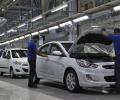
BS-VI emission norms and the COVID-19 lockdown impacted the dispatches.

Having exposure to international funds and gold is a must for those who have foreign currency-denominated goals.

'As the world changes, we will be on a constant change programme too,' advertising agency J Walter Thompson Global Chief Executive Officer Tamara Ingram and South Asia CEO Tarun Rai tell Viveat Susan Pinto.

The proposed reorganisation plan by Reliance Industries Ltd to transfer its refining, marketing and petrochemical (oil-to-chemicals) businesses to a wholly-owned subsidiary is a step towards facilitating participation by strategic investors in the unit, Fitch Ratings said on Tuesday. The reorganisation of the business in Reliance O2C Limited (O2C) "will have a neutral impact on RIL's credit metrics and rating," it said in a statement. The transfer will be on a "slump sale basis", subject to attaining the requisite approvals.

The good news for PepsiCo is that the foods segment has normalised much faster to pre-pandemic levels than beverages.
